
Brinksway Tool has always prioritised efficiency, performance and long‑term reliability. Aligned with Hyde Group’s wider responsibility to reduce environmental impact, the business continually looks for practical improvements across its facilities. Their recent investment in six High Volume Low Speed (HVLS) fans from MegaFan Technologies exemplifies this approach, delivering measurable energy savings while improving factory working conditions.
The system improves temperature control, maximises the use of existing energy, reduces waste and lowers carbon impact, while enhancing comfort across the factory floor. This investment is part of Hyde Group’s ongoing commitment to responsible manufacturing and continuous improvement whilst delivering tangible environmental benefits.
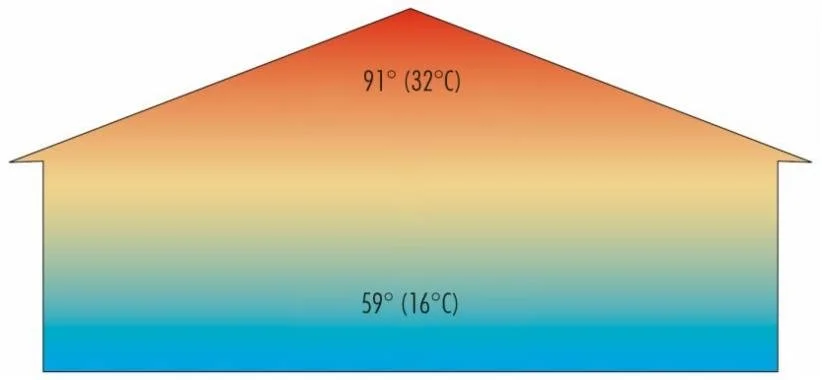
Large industrial buildings like those across the Hyde Group, are prone to thermal stratification, where heat from heating systems, machinery and processes rises and accumulates at roof level, leaving cooler air in the occupied zone below. As working areas are typically limited to around two metres above floor level, heat above this height provides little benefit.
In high‑bay environments, temperatures can rise by 0.8 to 1.6°C per metre of height, meaning air at roof level can exceed 30°C while the shop floor remains at a much lower point. As a result, a significant proportion of heating energy is wasted warming unoccupied roof space. Higher roof temperatures also increase heat loss through the building fabric and encourage cold air ingress at low level, particularly in older industrial buildings with lower insulation and air tightness.
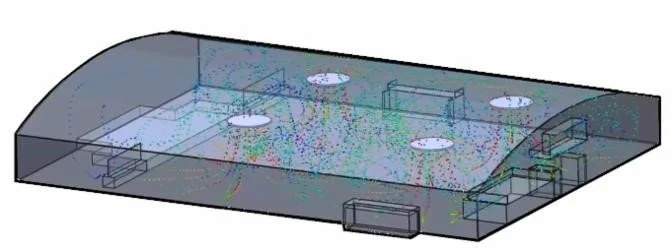
HVLS technology addresses this by gently recirculating warm air back into the occupied zone. Operating at low rotational speeds while moving large volumes of air, the system evens out temperatures and dramatically reduces floor‑to‑ceiling differentials. In a properly de-stratified space, this difference can be reduced to one or two degrees, allowing target working temperatures to be maintained with lower thermostat settings and reduced heating runtime.
HVLS fans deliver increasing energy savings as ceiling height rises and external temperatures fall. In buildings of a similar scale, winter heating energy reductions of over 30 percent are typical. The system also recovers heat generated by machinery and processes, returning it to the working zone rather than allowing it to collect and escape at high level.
The benefits extend beyond winter. In warmer months, higher fan speeds create gentle air movement at floor level, improving comfort without energy‑intensive cooling systems. The large diameter and slow rotation ensure airflow remains comfortable and non‑disruptive.